Textile Circular Economy Challenge: Closing the Loop in Estonia's Reuse Ecosystem
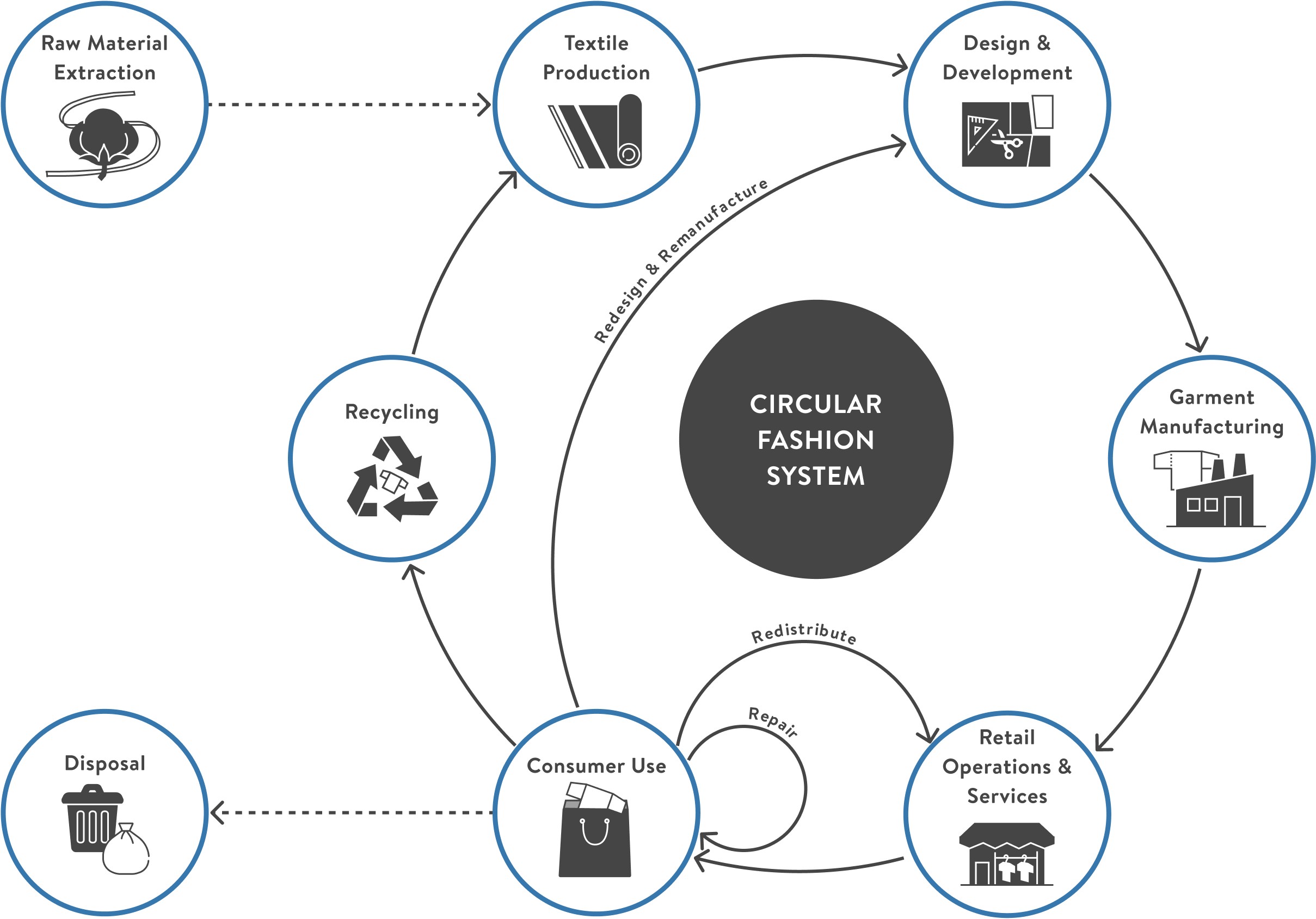
Role: Team Member (AISS SPICE) | Duration: Fall 2025 - First Semester | Focus: Circular Economy, Systems Design, Sustainability
This systems-level analysis examined why 60-70% of donated textiles in Estonia fail to re-enter local circulation despite strong environmental values and established second-hand infrastructure. Through field visits to Uuskasutuskeskus, interviews with Humana operations, and survey research with 35 Tallinn residents, we mapped the complete textile ecosystem using Actor-Network Theory (ANT) and Value Sensitive Design (VSD) frameworks to identify critical bottlenecks where materials exit circularity pathways.
Our methodology combined qualitative contextual inquiry (site observations, semi-structured interviews) with thematic analysis of operational challenges, revealing three primary failure points: donation quality degradation (unsuitable items increasing disposal costs), infrastructure accessibility gaps (30% of respondents citing inconvenient donation points), and operational inefficiency (single-use plastic storage contradicting sustainability goals). The analysis employed ANT to map how human actors (consumers, sorters, volunteers) and non-human actors (donation bins, storage systems, policy frameworks) jointly shape textile flow through the system.
We developed three low-fidelity prototypes addressing different lifecycle stages: pre-donation quality guidance (posters and influencer campaigns), donation accessibility (strategic bin placement at universities/dormitories), and post-donation operations (reusable Ghana Must-Go bag storage systems). The VSD analysis explicitly connected values (sustainability, accessibility, fairness, labor dignity) to concrete design requirements, demonstrating how infrastructural decisions embody ethical commitments. Estonia has EU textile collection mandates, yet implementation gaps persist due to insufficient enforcement and cultural barriers.
The project contributes to circular economy literature by demonstrating that policy frameworks alone are insufficient; effective circularity requires aligning infrastructure with actual user behavior, organizational capacity, and material realities. Future research should expand to pilot testing of proposed interventions and upstream consumption pattern analysis.
Skills Demonstrated: Actor-Network Theory, Value Sensitive Design, systems thinking, qualitative research methods, circular economy principles, stakeholder engagement, prototype development.
Details of the entire project and the final report can be found here:
Category: masters portfolio
541 
0


Comments