Accessibility and AI: Bridging Technology and Inclusion
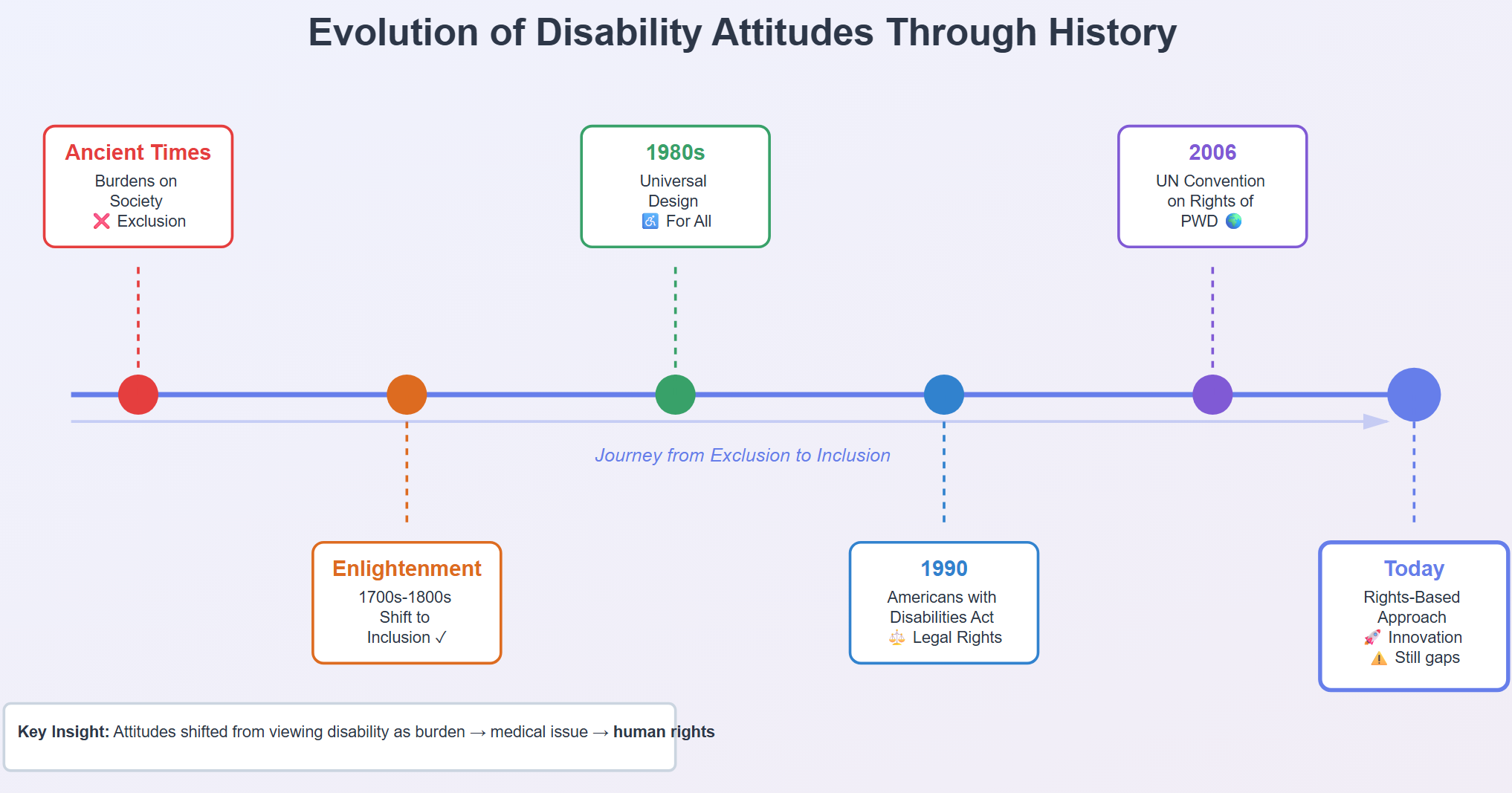
Role: Solo | Duration: Fall 2025 - First Semester | Focus: Digital Accessibility, Human-Computer Interaction, Inclusive Design
This presentation synthesizes global accessibility research, policy frameworks, and technological innovations into a comprehensive overview of how AI both enhances accessibility for people with disabilities and requires accessible design itself. The work addresses the 1 billion people worldwide (15% of global population) living with disabilities, examining how AI-powered assistive technologies transform participation while highlighting critical gaps in implementation.
The content structure progresses systematically through foundational concepts to advanced applications: (1) Understanding Accessibility establishes the scope across visual, hearing, motor, and cognitive disabilities with concrete statistics (1 in 30 UK residents are blind or visually impaired; 15% have dyslexia); (2) AI Enhancement examines how technologies improve access through screen readers with natural language processing, computer vision for image description, real-time captioning/translation, and voice assistants enabling hands-free control; (3) Case Studies provides empirical impact data including Facebook/Twitter's automatic alt text generation reaching 10+ million images daily and accuracy rates across five accessibility technologies (voice recognition 95%, auto-captioning 90%, image description 85%); (4) Market Analysis presents growth projections ($3.2B in 2020 to $18.9B by 2030) demonstrating business case for accessibility investment.
Critical analysis sections address implementation challenges: bias in training data (AI models trained on non-diverse datasets fail underrepresented populations), cost/availability barriers (advanced assistive technologies remain expensive and geographically concentrated in developed countries), and privacy concerns (AI systems requiring personal data for functionality). The presentation examines the ethical dimensions through four principles: autonomy/agency (AI should empower, not replace decision-making), equity/fairness (accessibility as built-in, not premium add-on), privacy/data protection (user control over personal information), and transparency (explainable AI systems with clear capability/limitation communication).
The policy framework section synthesizes key standards (WCAG, Section 508, EN 301 549, ADA) with concrete tools (Microsoft Seeing AI, Google Live Transcribe, Be My Eyes, Voice Control systems), providing practitioners actionable implementation pathways. Best practices enumerate six developer/organization responsibilities including testing with real users throughout development, following established accessibility standards, providing multiple task completion methods, documenting features clearly, regular bias audits, and offering human alternatives when AI cannot meet needs.
Future directions explore emerging technologies: brain-computer interfaces for severe motor disabilities, personalized AI assistants adapting to individual needs over time, universal design through automated interface optimization, and real-time environment analysis for enhanced navigation. The presentation concludes with differentiated calls to action for developers (build accessibility from day one), designers (include disabled users in research), business leaders (prioritize in AI strategy), educators (teach accessibility principles), and all individuals (advocate and hold organizations accountable).
Visual design employs consistent color schemes, clear typography, accessible color contrast ratios, and comprehensive alt text for all images, modeling the accessibility principles it advocates. Data visualizations present market growth, technology adoption rates, and accuracy metrics in formats accessible to diverse audiences.
Skills Demonstrated: Accessibility standards (WCAG, Section 508), inclusive design principles, assistive technology evaluation, policy analysis, ethical framework development, presentation design, technical communication.
Details of the entire project on Accessibility can be found here:
Category: masters portfolio
668 
0

Comments